
Laser Tattoo Removal or Tattoo Lightening
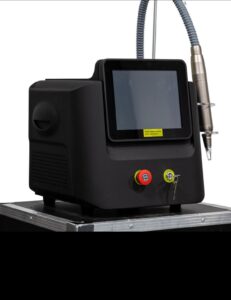
Whether you’re looking to completely erase a past decision or lighten an old tattoo for a fresh cover-up, our advanced Elite Picosecond Laser delivers precise, effective results. By breaking down ink particles into microscopic fragments without damaging the surrounding tissue, we help you restore clean, clear skin.
Skin Safety & The Fitzpatrick Scale: Who Is Suitable?
Laser tattoo removal relies on targeting contrast between skin pigment (melanin) and tattoo ink. Because laser light is naturally attracted to dark pigment, skin tone plays a critical role in treatment safety.
We utilise the Fitzpatrick Skin Type Scale to evaluate suitability and prevent skin complications:
Fitzpatrick Types I–III (Fair to Medium Light Skin):
Ideal Candidates. High contrast between skin tone and tattoo ink allows the laser energy to target only the ink without absorbing into natural skin pigment.
Fitzpatrick Type IV (Olive / Light Brown Skin):
Suitable with Caution. Requires customised lower fluence settings and patch testing to ensure the natural skin pigment remains protected.
Fitzpatrick Types V–VI (Deep Brown to Dark / Rich Skin Tones):
Not Suitable for Treatment. Because deep skin tones contain abundant melanin, the laser energy cannot safely distinguish between the tattoo ink and the skin’s natural pigment. Treating Fitzpatrick Types V and VI carries a high risk of hyper-pigmentation (dark spots), hypo-pigmentation (permanent loss of natural skin pigment/ghosting), blistering or scarring.
Client safety is our top priority. We conduct a skin consultation and patch test prior to commencing any removal plan.
How It Works: The Elite Picosecond Advantage
Unlike traditional lasers that rely heavily on heat energy, the Elite Picosecond Laser uses ultra-short picosecond pulses (trillionths of a second) to deliver photo-acoustic pressure waves. This shatters stubborn ink pigment into dust-like particles, which your body’s lymphatic system then naturally flushes away over time.
The Effect on Deep, Dark Tattoos
Dense Black & Charcoal Inks: Deeply saturated dark inks absorb picosecond energy exceptionally well, making black and dark blue inks the most responsive to treatment.
Ink Depth & Layering: Professional dark tattoos sit deep within the dermis. Because the ink load is dense, deep dark tattoos require a gradual treatment process.
Progressive Lightening: As early sessions break down the superficial layers of pigment, your body clears them, allowing subsequent sessions to reach deeper ink safely.
How Many Sessions Will You Need?
Tattoo removal is a multi-step process. The total number of sessions required varies depending on key factors:
Tattoo Size & Location: Areas closer to the heart (with stronger circulation) tend to clear faster than lower extremities like ankles or fingers.
Ink Depth & Density: Older or professionally applied dark tattoos carry a heavier ink load and require more treatments than lighter/shading work.
Individual Lymphatic Health: Your immune system works to flush away the shattered ink between visits.
Your Goal: Full erasure requires more sessions than fading a tattoo for a cover-up.
Treatments are spaced 6 to 8 weeks apart to give your skin time to fully heal and allow your body to process the cleared pigment.
Pricing Structure
Pricing is structured per session based on tattoo size:
Micro / Small Tattoo (e.g., small symbol, initials up to 3×3 cm): R200+ per session
Palm Size (e.g., wrist, ankle, small script up to 7×7 cm): R450 – R650+ per session
Large Tattoo (e.g., forearm, shoulder piece up to 15×15 cm): Quote on Consultation
Extra-Large / Custom Pieces (e.g., half sleeve, back piece): (Quote on Consultation)
- Brow Removal R650
Pre-Treatment Care
Avoid Sun & Tanning: Strictly avoid direct sun exposure, tanning beds and self-tanners for at least 4 weeks prior to treatment.
Discontinue Active Skincare: Stop using retinoids, chemical exfoliants and active serums on the area 1 week prior.
Hydrate: Drink plenty of water for 48 hours before your session to optimize your body’s immune and lymphatic response.
Shave the Area: Gently shave surface hair from the target area 24 hours beforehand.
Avoid Alcohol & Blood Thinners: Refrain from alcohol and blood-thinning medications (aspirin, ibuprofen) for 24–48 hours prior.
Post-Treatment Care & Healing
First 24-48 hours (Water Exposure): Keep the treated area completely dry. Avoid getting direct water from the shower or bath on the skin. Wash gently with a mild, fragrance-free cleanser after 24 hours and pat dry.
Days 2 to 3 (In the Shower): You may take gentle showers, but do not let direct, high-pressure water hit the area. Wash gently around the site using a mild, fragrance-free cleanser and your hands – never rub with a washcloth or loofah. Gently pat the skin dry with a clean paper towel or fresh towel.
For 1 to 2 Weeks (Soaking & Baths): Avoid all baths, hot tubs, swimming pools, saunas and ocean swimming until the skin is fully healed and free of any scabbing, flaking or blistering. Soaking unhealed skin increases the risk of infection and slows down recovery.
Soothe & Protect: Apply a thin layer of soothing post-care balm as directed.
Frosting & Blistering: Temporary whitening (“frosting”), swelling or mild blistering can occur as energy releases. Do not scratch or pick.
Avoid Heat Exposure: Avoid hot showers, saunas, hot tubs and heavy workouts for 48–72 hours post-session.
Strict Sun Avoidance: Keep the treated area covered and out of direct sunlight for at least 4 weeks. Once the initial healing phase is complete and skin is intact, apply a broad-spectrum SPF 50+ sunscreen daily whenever the area is exposed to light for the entire duration of your tattoo removal journey.
Absolute Medical Contraindications (Treatment Cannot Be Performed)
Clients with any of the following conditions should not undergo picosecond laser treatments due to high risk of adverse reactions, delayed healing, or systemic complications:
Active Skin Infections or Open Wounds: Any active bacterial, viral (e.g., active Herpes Simplex / cold sores), or fungal infections in the treatment area.
Pregnancy & Breastfeeding: Laser treatments are strictly prohibited during pregnancy and nursing due to hormonal fluctuations and a lack of clinical safety data regarding systemic pigment removal processes.
History of Keloid or Hypertrophic Scarring: Individuals prone to raised keloid scars have a high risk of developing severe scarring as the skin attempts to heal.
Accutane / Isotretinoin Use: Anyone currently taking Isotretinoin (or who has taken it within the last 6 to 12 months) cannot be treated due to severe skin fragility and impaired wound healing.
Active Cancer or Undiagnosed Lesions: Anyone currently undergoing chemotherapy, radiation therapy or who has suspicious/undiagnosed skin lesions or moles near the target area.
Autoimmune Disorders with Impaired Healing: Conditions such as active Lupus (SLE), Scleroderma or poorly managed Vitiligo (which can trigger the Koebner phenomenon, causing white patches to spread to treated skin).
Seizure Disorders Triggered by Light: Photosensitive epilepsy or light-induced seizure conditions (due to the flashing aiming beam and rapid laser pulses).
Relative Contraindications & Conditions Requiring Doctor’s Clearance
Clients with these conditions may require specialised protocols, lower settings or written clearance from their primary healthcare provider:
Uncontrolled Diabetes: High or unstable blood sugar levels severely impair blood circulation and slow down skin recovery, increasing infection risks.
Blood Clotting Disorders or Anticoagulant Therapy: Clients taking blood thinners (e.g., Warfarin, Aspirin, Heparin) or with bleeding disorders are at higher risk for petechiae, excessive bruising or prolonged bleeding.
Immunosuppression: Individuals taking immunosuppressive medications or living with conditions that weaken the immune response (e.g., HIV) will experience significantly slower ink clearance, as the lymphatic system processes fragmented ink much less efficiently.
Gold Therapy (Chrysotherapy): Clients who have taken gold salts for arthritis treatment may experience a permanent blue-grey or golden skin discoloration (chrysiasis) upon laser exposure.
Photosensitizing Medications: Certain antibiotics (e.g., Tetracyclines, Doxycycline), diuretics or acne medications cause hypersensitivity to light and must be paused prior to treatment under medical guidance.